Part of: The process that only lives in your head
Notes into SOPs
Turn messy notes and voice memos into SOPs and checklists with an LLM
Convert unstructured notes and voice transcripts into a verified SOP plus a phone-friendly checklist a floor team can run Monday, with a human confirmation pass.
What you will be able to do
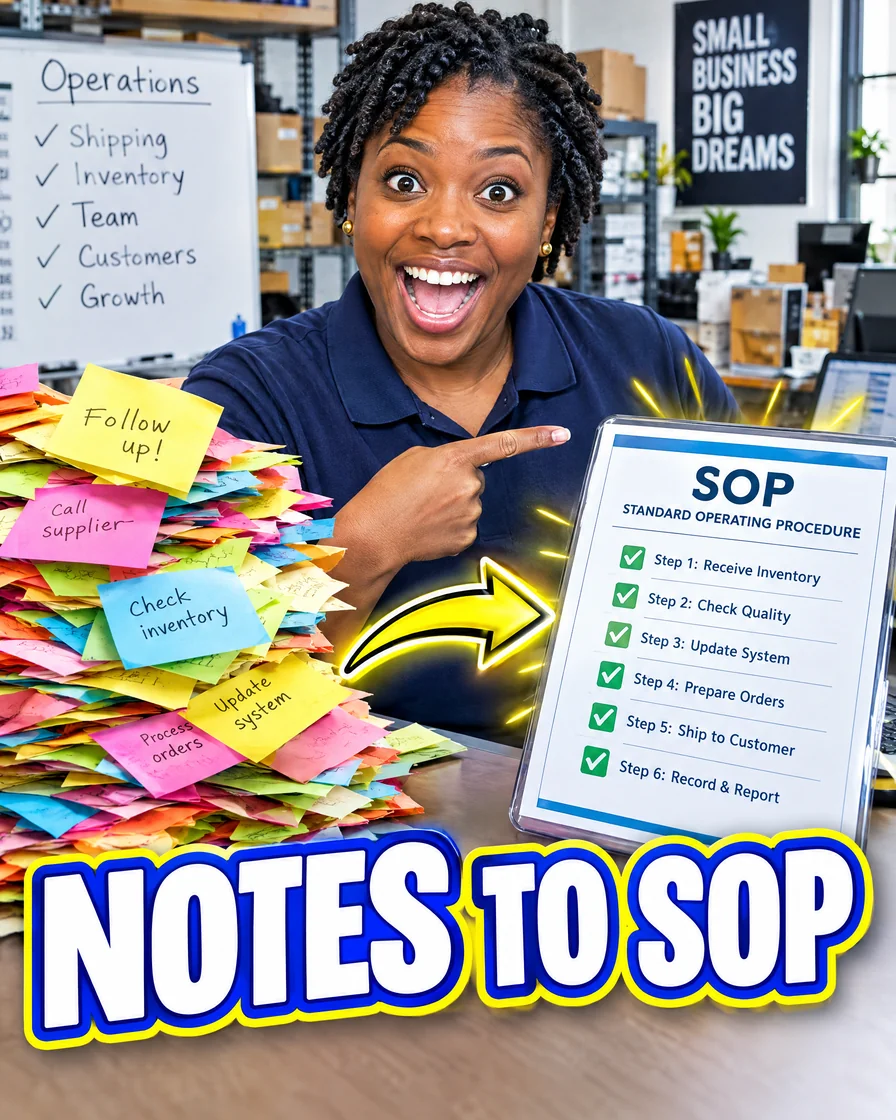
By the end of this guide, you will turn a pile of sticky notes, chat dumps, or a voice memo into a one-page SOP and a short checklist your team can follow without calling you mid-job.
Why messy procedural knowledge stays unretrieved in owners’ heads
In dental offices, med spas, HVAC shops, and trade businesses, the “how we do it here” lives in the owner’s head, a senior tech’s habits, and half-finished texts. When that person is out, quality slips.
A language model is good at sorting and naming steps. It is not good at inventing how your shop actually works. Your job is to feed it raw truth, then verify.
Step 1: Capture raw source material without cleaning it
Record or put whatever you have:
- Voice memo after a job (“Here’s how we commission a new install…”)
- Photos of whiteboard steps
- Chat thread where you explained a process to a new hire
- Bullet notes from a team huddle
Tell the model: “Do not invent steps. Organize only what I provide. Mark gaps as [NEED].”
Cleaning too early makes you drop edge cases you still need in the SOP.
The same idea works when the raw material comes from a client: funeral homes, for example, can use a family obituary questionnaire and AI first draft instead of rebuilding notes from memory.
Step 2: Name the procedure with three labels
Before asking for a full SOP, define:
- Role — who runs this (front desk, lead tech, assistant)
- Trigger — when it starts (new patient booked, truck leaves yard, machine alarms)
- Done — what “finished” looks like (chart updated, customer signed, unit tested)
Prompt example:
“Turn these notes into an SOP for [role]. Trigger: [trigger]. Done when: [done]. Use numbered steps. Keep tools and materials in a short list at the top.”
Step 3: Ask for an SOP, then a phone-friendly field checklist
First output: a readable SOP (purpose, tools, steps, exceptions).
Second output in the same chat:
“Compress this into a checklist the [role] can tick on a phone. Max 12 items. Action verbs only. No essays.”
Teams run checklists. They skim SOPs when something breaks. You need both.
If you work in Claude, put that checklist into a Claude Artifact for business so the latest version sits in one editable panel.
Step 4: Add exceptions and safety lines deliberately
Prompt for a third pass:
“List exceptions and stop-points only. If a step can harm a person, damage equipment, or break a regulation, mark it STOP and say who to call.”
Do not let the model invent safety rules. Provide your real rules and ask it to place them next to the right steps.
Step 5: Verify with one real run
Hand the draft to the person who already does the job well. Ask them to mark:
- Missing steps
- Wrong order
- Words nobody on the team uses
- Steps that only apply in special cases
Update the doc from their markup. The language model did the sorting; the floor owns accuracy.
Step 6: Publish where Monday work actually happens
Put the checklist where the work happens:
- Printed in the truck binder
- Pinned in the ops chat topic
- Linked from the scheduling board
- Saved next to the machine or treatment room
Name files with a date: closing-checklist-2026-09-20.md. Retire old copies so nobody follows last year’s process.
For a home care agency, the document that has to live where the work happens is the schedule; here's a free caregiver schedule template in Google Sheets.
A simple weekly habit
Each Friday, pick one messy process that caused a callback, delay, or “ask the owner” moment. Spend 20 minutes:
- Voice-memo the real steps
- Run the SOP + checklist recipe
- Verify with one lead
- Publish before Monday
In a month you will have a small library of runbooks instead of another pile of notes.
What the language model should not own
Do not use the model as the source of truth for licensed clinical protocols, electrical code, or warranty terms. Use it to organize your documented practice, then confirm against the official source your business already follows.
Keep these
The working rules
Dump raw notes first; structure comes in the second pass. Then: Name the role, trigger, and “done” definition before you ask for an SOP; Turn long procedures into checklists people can tick on a phone; Have one experienced tech or lead verify the draft against real work; Version the doc so the floor always knows which sheet is current.
Floor vote
Where does “how we do it here” live today?
One vote per device. Change it any time.
Loading votes…
Field check
Field check
A short check before you hand a draft SOP to the floor.
01 / 04
Did you dump raw notes first, before asking for structure?